
Join Literature TV 250 on Rumble with Or on Whatsapp on the link or on andikanews.rw channel
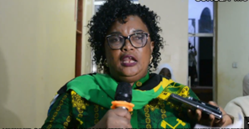
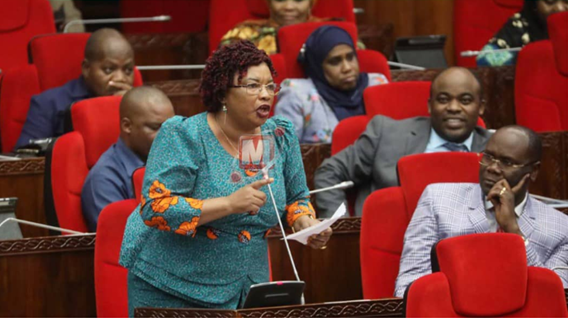
Ms. Msongozi stood up to strongly condemn certain men who persist in the harmful practice of consuming their wives’ breast milk—effectively competing with infants for it. This has even led to cases of malnutrition among children, as they are deprived of the essential nutrients contained in the breast milk.
At the time, she urged the government to conduct research into this issue and take action to address it, arguing that children are being denied the nutrients necessary for their growth because these are being consumed by adults instead. He stated, “…There is a growing problem in our society: some men—fathers—are violating children’s rights by breastfeeding from their wives, even though it is the child who ought to be nursing. This issue is occurring in various provinces, and I urge the Ministry to conduct research into it. There are these so-called ‘fathers’—men who are completely out of line—who consume the milk intended for the children. They breastfeed from their nursing wives, depriving the child of the essential nutrients contained in the milk; instead, it is the father who consumes it. Someone here has also pointed out to me that breast milk contains various compounds—which some men have apparently discovered—and it is even said to cure hangovers in those who have been drinking alcohol. Therefore, I call upon the Ministry to establish a robust intervention and provide appropriate solutions, ensuring that these men stop denying children their fundamental rights.” In the regions of Tanzania where the practice of men breastfeeding from their wives occurs, there is reportedly a severe problem of malnutrition and extreme stunting among children. This is because the children are deprived of essential nutrients that play a critical role in their development, often resulting in them being significantly underweight for their age.
The primary reasons for this phenomenon appear to stem from misconceptions or unfounded claims—ideas that lack any scientific basis or research to support them. For instance, some men have been led to believe that breast milk can cure a hangover or alleviate the physical weakness and malaise experienced after a night of heavy drinking.
Another belief—one that some men accept as true, leading them to breastfeed from their partners—is that breast milk enhances sexual performance. Additionally, some individuals who engage in exercise to build muscle believe that breast milk promotes muscle growth.
This trend, where some men take to breastfeeding from their partners—disregarding the needs of their own children—has also become a source of abuse against nursing mothers. These women are often pressured by their partners to comply; in some cases, this leads to health complications, such as swelling of the nipples or the development of sores caused by breastfeeding an adult. Furthermore, this practice deprives infants of essential nutrients, which can result in stunted growth.
In Tanzania, this issue is particularly prevalent in the regions of Shinyanga, Tanga, and Iringa. In Tanzania, a government-led awareness campaign—conducted in collaboration with health authorities—has been launched to remind men that breast milk is intended exclusively for infants, and that a child who is deprived of it faces negative consequences for their health and development.
The practice of men breastfeeding from their wives is not unique to Tanzania; in Uganda, too, some men compel their wives—including those who are currently nursing infants—to let them breastfeed, claiming that it brings them closer to their partners. Furthermore, women who comply often do so out of a sense of having no other choice, fearing mistreatment by their husbands if they refuse. Although this occurs in Uganda, it is rarely discussed and remains a taboo subject. In 2018, while addressing the Ugandan Parliament, the country’s Minister of Health, Sarah Opendi, attempted to raise the issue and condemn the practice, noting that it compromises the health of the children. However, according to a 2024 report by the news outlet Africanews, the matter has not been followed up on, nor have any official government measures been taken to address it.
Similar reports have emerged from Kenya—as covered by media outlets such as The Standard and The Guardian—where some men breastfeed from their wives. Some believe that breast milk possesses restorative properties capable of curing certain illnesses, while others engage in the practice as a way to strengthen the bond with their partners.
In Kenya, some men reportedly breastfeed from their wives, believing that the breast milk has the power to remove bad luck and bring good fortune to their lives. Others do so as a way to demonstrate to their wives that they still love them, even after childbirth and the physical changes that accompany it. This practice—where some men breastfeed from their wives—is reportedly most prevalent in Kenya’s Western Region, specifically in Kakamega County, with the area of Butere being particularly well-known for it.
Much like in Tanzania, health authorities in Kenya consistently condemn this harmful practice, in which men consume breast milk intended for infants. This deprives the children of essential nutrients, leading to stunted growth—a consequence of them not receiving the adequate nourishment they require, especially during the first six months of life, when breast milk should be their sole source of nutrition.
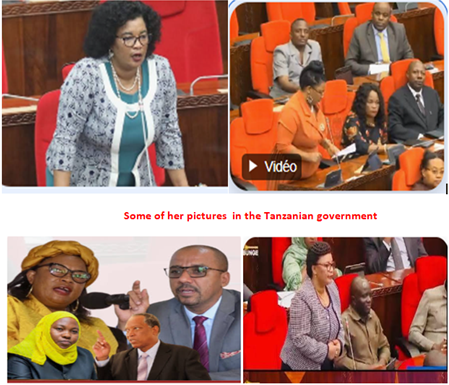
Jacqueline Kandidus Ngonyani Msongozi is a Member of Parliament in Tanzania, representing the “Special Seats” for women, and serves as the secretary for the CCM party in the Ruvuma Region.
She gained significant media attention due to statements and opinions she expressed within the National Assembly. Regarding men breastfeeding from women: In 2022, she stated that men should stop breastfeeding from their partners, arguing that it could deplete breast milk intended for infants, leading to negative consequences. Politically, she has frequently appeared in various parliamentary discussions and on social media, where she has shared her views on the administration of President Samia Suluhu Hassan, as well as other issues affecting the lives of the citizens.
This prominent Tanzanian politician and Member of Parliament also represents the ruling party, Chama Cha Mapinduzi (CCM), under the Special Seats (Viti Maalum) category for women representing the Ruvuma Region.
Political Career and appointments
She is Member of Parliament. She was first elected to the Parliament of Tanzania in 2015 for the 2015–2020 terms and was subsequently re-elected for the 2020–2025 legislative period
She is also Nutrition Ambassador: She serves as the Nutrition Ambassador (Balozi wa Lishe) for the Ruvuma Region, actively organizing educational seminars on nutrition for both entrepreneurial and non-entrepreneurial women.
She is Economic Advocacy: Her political platform focuses heavily on opening up economic doors for the citizens of Ruvuma, with a particular focus on agriculture and local infrastructure.
Her educational background
This legend woman studied her Secondary Education at Chimala Secondary School (1984–1988), earning her CSEE. She also pursuited her Secretarial Studies and ccompleted with a Certificate in Secretarial Courses at Tabora Secretarial College (1990) and later a Diploma in Secretarial Studies from the Tanzania Public Service College (1991–1992). Regarding Higher Education, she was enrolled in a Bachelor’s Degree program in Procurement at Bangalore University, India.
Join Literature TV 250 on Rumble
English • Literature • Education • Stories
Click here: https://rumble.com/c/c-7949674
- Open the link
2. Log in or create a free Rumble account
3. Click FOLLOW
Or on Whatsap on the link https://chat.whatsapp.com/EsjoyIq1Ur26Zicfgr9yH7
OR OUR CHANNEL https://whatsapp.com/channel/0029VbDJMjr0G0XejxLOdh0T
Thank you for supporting Literature TV 250!
Literature TV 250 is an instructive channel dedicated to promoting English language, literature, reading, writing, storytelling, poetry, drama, and critical thinking. Its purpose is to help students, teachers, writers, and other learners improve their knowledge and skills through clear lessons, literary discussions, educational materials, and inspiring stories, while also encouraging a love of literature and lifelong learning. Click here to join this Channel on other social media