
A monkey is a primate mammal belonging to the group of animals called simians. Monkeys are generally intelligent, social animals that have long tails (most species), grasping hands and feet, and forward-facing eyes that give them good depth perception.

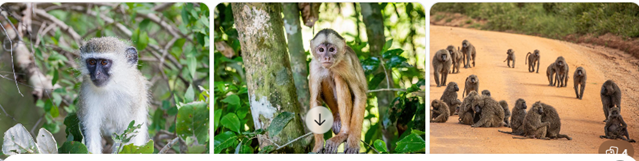
When walking through Huye City—particularly in the areas adjacent to the University of Rwanda’s Arboretum and its surroundings—one frequently encounters monkeys moving alongside people while foraging for food.
Although these monkeys are a delight for biodiversity and tourism enthusiasts, many Huye City residents constantly complain that the animals damage their property; unlike those who suffer damage caused by animals from national parks, these residents cannot claim compensation from the Special Guarantee Fund.
Huye residents have been voicing these complaints for years, having likely appealed to nearly every legislator they could reach—those who engage with citizens to hear their concerns and ideas in order to advocate on their behalf.
Senator Jean Pierre Dusingizemungu revisited the issue of these monkeys on July 15, 2026, as the Standing Committee on Foreign Affairs, Cooperation, and Security presented a report to the Senate Plenary regarding the oversight of measures to prevent animals from national parks from harming citizens and damaging property. He requested that these animals be added to the list of those covered by the Special Compensation Fund when they cause damage to citizens’ property.
He stated, “Reference was made to the wild animals in Nyagatare, but I would like to highlight the issue of monkeys in Huye. They have wreaked havoc on residents’ crops with utter impunity; no one even has a kitchen garden anymore—(raising and emphasizing his voice)—in short, monkeys are causing a very serious problem in Huye.”
He added, “No Member of Parliament or Senator can visit Huye without this issue being brought to their attention, regardless of the original purpose of their visit.”
The Chairperson of the Commission, Senator Murangwa Ndangiza Hadija, confirmed that a large number of Huye residents had raised this issue at the district level; she assured the assembly that discussions had been held with the Special Compensation Fund, expressing confidence that these animals would also be included on the list.
He stated, “While we—and the District administration—acknowledge the situation and have even formally requested a change in the regulations, we do not believe the issue can be resolved simply by adhering to a compensation list; that is why we resolved that the animals must be removed from human settlements.”
Senator Murangwa Ndangiza noted that the relevant authorities need to devise a strategy to tangibly reduce the problem of animals roaming among the population. She argued that—given the sheer number of monkeys and the havoc they wreak—merely compensating residents would not solve the underlying issue; the real priority is finding a way to prevent the animals from returning to inhabited areas.
She further emphasized that the removal of animals from human settlements should not be limited to monkeys but should extend to other animals roaming freely—particularly in Nyagatare Town—as well as hippos and buffaloes that stray from the national park.
However, Senator Sosthène Cyitatire holds the view that the residents’ pleas and the Senate’s advocacy on their behalf reflect a degree of selfishness, as people tend to overlook the fact that animals also have a right to exist. He stated, “It appears that when the Commission examined this issue, it focused only on one side—that of the people and their property. They did not sit down to consider the animals and their rights; yet these animals are essential, and they possess rights just as humans do.”
According to Senator Cyitatire, the issue of removing animals from areas inhabited by people must be grounded in research conducted by relevant authorities in collaboration with biodiversity experts, because “humans need to exist, animals need to exist, and we cannot survive without them.”
Meanwhile, Senator Emmanuel Havugimana noted that this is a widespread issue; therefore, the priority should be ensuring that both parties—humans and animals—can coexist without significant conflict.
Citing the example of the monkeys in Huye, he noted that research on the interaction between wildlife and human communities has shown it is possible to keep them away from populated areas.
While others have proposed fencing off national parks and installing electric fences as a solution, Senator Havugimana argued that the approach requires first identifying what the animals dislike and planting those crops in the area between the forest habitat and human settlements—essentially creating a “buffer zone.”
He stated, “Crops that the animals dislike, such as tea and chili peppers, should be planted in that buffer zone. That way, they would not cross over into areas inhabited by people.”
Although the Huye monkeys were a topic of discussion for many during the Senate Plenary Session, Senator Amandin Rugira—Vice Chairperson of the Standing Committee on Foreign Affairs, Cooperation, and Security—reminded the assembly that the report presented to the Senate focused primarily on wildlife from national parks, as those are the animals covered by the Special Compensation Fund. He said, “When we undertook that operation, we were dealing with animals from the park. Those Huye monkeys do not originate from the park itself but from nearby forests; however, the conclusion we reached—which applies to the Huye monkeys as well—is that these animals are coming from areas inhabited by people and should be removed, as those are not their designated habitats.”