
On July 15, members of the legislature received a report from the Committee on Foreign Affairs, Cooperation, and Security regarding oversight of efforts to prevent wildlife from leaving national parks to harm citizens or damage their property.
Several Senators offered comments and recommendations on how to resolve this issue permanently. Senator Murangwa Hadija, the committee chairperson, highlighted various findings regarding wildlife that damages citizens’ crops or property—often without compensation—particularly when the damage is caused by species not covered under the law governing compensation for wildlife-related losses.
It was noted that even when compensation is provided, the amounts are often very low compared to the extent of the damage.
As highlighted by Senator Uwamariya Valentine, one proposed solution is to conduct a census of the wildlife in Rwanda’s parks to determine population sizes and assess whether there is sufficient food to prevent the animals from venturing outside in search of sustenance among local communities. Senator Uwamariya stated, “The report indicates that RDB is set to conduct a study—specifically a census of the wildlife present. Given that we do not have many parks, determining the actual number of animals versus the capacity the parks should hold is a matter of urgency. I am unsure if RDB has provided a timeline for this exercise; however, unless this issue is resolved—aligning animal populations with the size of our parks—the problem will persist, and compensation costs will continue to rise.”
“I do not believe the country can sustain these ongoing payouts; instead, we must collaborate with all relevant stakeholders to assess the size of our parks and the number of animals they contain. This cannot be achieved without the expertise of biodiversity specialists, as we need the wildlife, yet people also need to live in peace and safety.”
In Senator Uwamariya’s view, this issue may stem from either a scarcity of food in the animals’ habitats or an overpopulation of the animals themselves.
It is said that where a problem is identified, a solution can also be found. She stated, “Increasing compensation is one thing—a measure to take while a lasting solution is still pending—but we urgently need to know the exact number of animals we have and determine the maximum population the park’s area can sustainably support.”
Senator Murangwa Hadija noted that during discussions with park representatives, they received extensive information regarding the animals—such as the reasons they stray outside the parks, the fact that some species reproduce very rapidly leading to overpopulation, and other related issues.
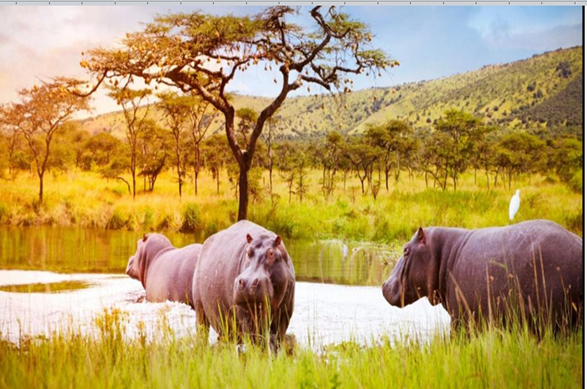
She said, “They explained that there is a problem regarding insufficient food sources, combined with high numbers and rapid reproduction rates. For instance, they mentioned the hippos in Kayonza that were left outside the park boundaries when the fencing was installed. They reported that 72 hippos remained outside; their locations are known, and they frequently cause problems—in one year alone, they killed six people…”
She also echoed the sentiments of the Senators calling for a census, adding, “As you mentioned, research will provide a solution—or rather, multiple solutions. This includes assessing park sizes and their carrying capacity for wildlife, as well as exploring ways to manage rapidly breeding populations—perhaps to reduce their numbers—among other strategies. We believe this research will be of great assistance to us.”