
Leaving by Moyez G. Vassanji (Tanzania)
Kichwele Street was now Uhuru Street. My two sisters had completed school and got married and our mother missed them sometimes. Mehroon, after a succession of wooers, had settled for a former opening batsman of our school team and was in town. Ruzia was a wealthy housewife in Tanga, the coastal town north of Dar. Firoz dropped out in his last year at school, and everyone said that it was a wonder he had reached that far. He was assistant bookkeeper at Oriental Emporium, and brought home stationary sometimes.
Mother had placed her hopes on the youngest two of us, Aloo and me, and she did not want us distracted by the chores that always needed doing around the store. One evening she secured for the last time the half a dozen assorted padlocks on the sturdy panelled doors and sold the store. This was exactly one week after the wedding party had driven off with a tearful Razia, leaving behind a distraught a mother in the stirred-up dust of Uhuru Street. We moved to the residential area of Upanda. After the bustle of Uhuru Street our new neighborhood seemed quiet. Instead of the racket of buses, bicycles and cars on the road, we now heard the croaking of frogs and the chirping of insects. Nights were haunting, lonely and desolate and took some getting used to. Upanga Road emptied after seven in the evening and the side streets became pitch dark, with no illumination. Much of the area was as yet uninhabited and behind the housing developments there were overgrown bushes, large, scary baobab trees, and mango and coconut groves.
Sometimes in the evenings, when Mother felt sad, Aloo and I would play two-three-five with her, a variation of whist for three people. I had entered the university by then and came back at weekends. Aloo was in his last year at school. He had turned out to be exceptionally bright in his studies-more so than we realized. That year Mr Datoo, a former teacher from our school who was also a former student, returned from America for a visit. Mr Datoo had been a favourite with the boys. When he came he received a tumultuous welcome? From the next few days he toured the town like the Pied Piper followed by a horde of adulating students, one of whom was Aloo. The exciting event inspired in Aloo the pope that not only might he be admitted to an American university, but he could also win a scholarship to go there. Throughout the rest of the year, therefore, he wrote to numerous universities, culling their names from books at the USIS, often simply at random or even only by the sounds of their names. Mother’s response to all these efforts was to humour him. She would smile. “Your uncles in America will pay thousands of shillings just to send you to college,” she would say. Evidently, she felt he was wasting his time, but he would never be able to say that he did not have all the support she could give him.
Responses to his enquiries started coming within weeks and a handful of them were the better places, and which among them the truly famous. Soon a few catalogues arrived, all looking impressive. It seemed that the more involved he became with the application process, the more tantalizing was the prospect of going to an American university. Even the famous placed did not discourage him. He learnt of subjects he had never heard of before: genetics, cosmology, artificial intelligence: a whole universe was out there waiting for him if only he could reach it. He was not sure if he could, if he was good enough. He suffered periods of intense hope and hopeless despair. Of course, Aloo was entitled to a place at the local university. At the end of the year, when the selections were announced in the papers, his name was on the list. But some bureaucratic hand, probably also corrupt, dealt out a future prospect for him that came as a shock. He had applied to study medicine; he was given a place in agriculture. An agriculture officer in a rural district somewhere was not what he wanted to become however national parks once on a school trip. When Aloo received a letter from the California Institute of Technology offering him a place with a scholarship, he was stupefied at first. He read and reread the letter, not believing what it seemed to be saying, afraid that he might be reading something into it. He asked me to read it for him.
When he was convinced there was no possibility of a mistake he became elated. “The hell I’ll do agriculture!” he grinned. But first he had to contend with Mother.
Mother was incredulous. “Go, go,” she said, “don’t you eat my head, don’t tease me!”
“But it’s true!” he protested. “They’re giving me a scholarship!”
We were at the table – the three of us – and had just poured tea from the thermos. Mother sitting across me started at her saucer for a while then she looked up.
“Is it true?” she asked me.
“Yes, it’s true,” I said. “All he needs is to take 400 dollars’ pocket money with him.” “How many shillings would that make?” she asked. “About three thousand” “And how are we going to raise these three thousand shillings?
Have you bought a lottery? And what about the ticket? Are they going to send you a ticket too?” As she said this Aloo’s prospects seemed to get dimmer. She was right, it was not a little money that he needed.
“Can’t we raise a loan?” he asked. “I’ll work there. Yes, I’ll work as a writer. A waiter! – I know you can do it; I’ll send the money back!”
“You may have uncles in America who would help you,” Mother told him, “but no one here will.”
Aloo’s shoulders sagged and he sat there toying with his cup, close to tears. Mother sat drinking from her saucer and frowning. The evening light came in from the window behind me and gave a glint to her spectacles. Finally, she set her saucer down. She was angry. “And why do you want to go away, so far from us? Is this what I raised for you – so you could leave me to go away to a foreign place? Won’t you miss us, where you want to go? Do we mean so little to you? If something happens…”
Aloo was crying. A tear fell into his cup; his nose was running. “So many kids go and return, and nothing happens to them… Why did you mislead me, then? Why did you let me apply if you didn’t want to go… Why did you raise my hopes if only to dash them? He had raised his voice to her, the first time I saw him do it, and he was shaking.
He did not bring up the question again and he prepared himself for the agricultural college, waiting for them to begin. At home he would slump on the sofa putting away a novel a day. If then unknown bureaucrat at the Ministry of Education had been less arbitrary, Aloo would not have been so broken and Mother would not have felt compelled to try and so something for him. A few days later, on a Sunday morning, she looked up from her sewing machine and said to the two of us: “Let’s go and show this letter to Mr Velji. He is experienced in these matters.
Let’s take his advice.”
Mr Velji was a former administrator of our school. He had a large egg-shaped head and a small compact with his large forehead and big black spectacles he looked the caricature of archetypal wise man. He also had the bearing of one. The three of us were settled in his sitting-room chairs staring about us and waiting expectantly when he walked in stiffly, like a toy soldier, to welcome us.
“How are you, sister?” he said. “What can I do for you?” “Aloo and I stood up respectfully as he sat down.
“We have come to you for advice …,” Mother began.
“Speak, then,” he said jovially and sat back, joining his hands behind his head. She began by giving him her history. She told him which family she was born in, which she had married into, how she had raised her kids when our father died. Common relations were discovered between our families. “Now this one here,” she pointed at me, “goes to university here, and that one wants to go to America. Show him the documents,” she commanded Aloo. As if with an effort, Aloo pushed himself out of the sofa and slowly made his way to place the documents in Mr Velji’s hands. Before he looked at them Mr Velji asked Aloo his result in the final exam.
At Aloo’s answer, his eyes widened. “Henh?” he said. “All A’s?” “Yes,” replied Aloo, a little too meekly.
Mr Velji flipped the papers one by one, cursorily at first. Then he went over them more carefully. He looked at the long visa form with the carbon copies neatly bound behind the original; he read over the friendly letter from the Foreign Student Adviser; he was charmed by the letters of invitation from the fraternities. Finally, he looked up, a little humbled. “The boy is right,” he said. “The university is good, and they are giving him a bursary. I congratulate you.”
“But what should I do?” asked Mother anxiously. “What is your advice? Tell us what we should do.”
“Well,” said Mr Velji, “it would be good for his education.” He raised his hand to clear his throat. Then he said, a little slowly, “But if you send him, you will lose your son. It’s a far place, America,” he concluded, wiping his hands briskly at the finished business. “Now what will you have – tea, orange squash?
His wife appeared magically to take orders.
“And the rich kids go every year and they are not lost,” muttered Aloo bitterly as we walked back home. Mother was silent.
That night she was at the sewing machine and Aloo was on the cough, reading. The radio was turned low and through the open front door a gentle breeze blew in to cool the sitting room. I was standing at the door. The banana tree and its offspring rustled outside, a car zoomed on the road, throwing shadows on the neighbouring houses. A couple out for a stroll, murmuring, came into sight over the uneven hedge, groups of boys or girls chattered before dispersing for the night. The intermittent buzz of an electric motor escaped from Mother’s sewing machine. It was a little darker where she sat at the other end of the room from us.
Presently she looked up and said a little nonchalantly, “At least show me what this university looks like – bring that book, will you?”
Mother had never seen the catalogue. She had always dismissed it, had never shown the least bit of curiosity about the place Aloo wanted so badly to visit. Now the three of us crowded around the glossy pages, pausing at pictures of the neoclassic façades and domes, columns towering over humans, students rushing about in a dither of activity, classes held on lush lawns in ample shade. It all looked so awesome and yet inviting.
“It’s something, isn’t it?” whispered Aloo, hardly able to hold back his excitement. “They teach hundreds of courses there,” he said. “They send rockets into space… to other worlds… to the moon –”
“If you go away to the moon, my son, what will become of me?” she said humorously, her eyes gleaming as she looked up at us. Aloo went back to his book and Mother to her sewing. A little later I looked up and saw Mother deep in thought, brooding, and as she often did at such times she was picking her chin absent- mindedly. It was, I think, the first time I saw her as a person and not only as our mother. I thought of what she must be going through in her mind, what she had gone through in bringing us up. She had been thirty- three when Father died, and she had refused several offers of marriage because they would all have entailed one thing: sending us all to the ‘boarding’ – the orphanage. Pictures of her before his death showed her smiling and in full bloom: plump but not excessively fat, hair puffed fashionably, wearing high heels and make-up. There was one picture, posed at a studio, which Father had had touched up and enhanced, which now hung beside his. In it she stood against a black background, holding a book stylishly, the nylon pachedi painted a light green, the folds falling gracefully down, the borders decorated with sequins. I had never seen her like that. All I had seen of her was the stern face getting sterner with time as the lines set permanently and the hair thinned, the body turned squat, the voice thickened. I recalled how Aloo and I would take turns sleeping together on her big bed; how she would squeeze me in her chubby arms, drawing me up closer to her breast until I could hardly breathe – and I would control myself and hope she would soon release me and let me breathe. She looked at me looking at her and said, not to me, “Promise me… promise me that if I let you go, you will not marry a white woman.”
“Oh Mother, you know I won’t!” said Aloo. “And promise me that you will not smoke or drink.” “You know I promise!” He was close to ears.
Aloo’s first letter came a week after he left, from London where he had stopped over to see a former classmate. It flowed over with excitement. ‘How can I describe it,’ he wrote, ‘the sight from the plane… mile upon mile of carefully tilled fields, the earth divided into neat green squares… even the mountains are clean and civilized. And London … Oh London! It seemed that it would never end… blocks and blocks of houses, squares, parks, monuments … could any city be larger? … How many of our Dar es Salaams would fit here, in this one gorgeous city…?’ A bird flapping its wings: Mr Velji nodding wisely in his chair, Mother staring into the distance.
From the anthology When the Sun Goes Down and Other Stories from Africa and Beyond. Edited by Emelia Ilieva and Waveney Olembo.
Questions about the the story
- How many siblings does the narrator have? What do we learn about each of them when the story begins?
- Why does the narrator’s mother close the store?
- What event triggers Aloo’s interest in foreign universities?
- Describe the mother’s reactions to Aloo’s interest in the foreign universities.
- Describe Aloo’s feelings on receiving a scholarship offer from California Institute of Technology.
- Describe the character of the narrator’s mother and that of Aloo.
- What is the significance of the last sentence, “A bird flapping its wings?”
- Imagine you are Aloo and you made a stop in London on your way to California. Write a letter describing London.
- “… but if you send him, you lose your son…” Explain the meaning of this sentence.
Discussion questions
- Discuss whether Mr Velji’s and Aloo’s mother’s fears are justified.
- Are there any advantages of studying abroad?
- Give reasons why some of those who leave for further studies abroad are reluctant to come back. What do you think should be done to encourage them to return home?
SUGGESTED ANSWERS
- The narrator has four siblings. Two of the sisters are married and living in different places. Mehroon is in town, and Ruzia is in Tanga, a coastal town north of Dar. Firoz is the assistant bookkeeper at Oriental Emporium. The youngest two siblings are Aloo and the narrator.
- The narrator’s mother closes the store because her two older daughters got married, and she wants the youngest two, Aloo and the narrator, to focus on their studies without being distracted by store chores.
- A visit from Mr. Datoo, a former teacher from their school who had been successful in America, triggers Aloo’s interest in foreign universities. Aloo becomes inspired and starts dreaming of studying in an American university and winning a scholarship.
- The mother’s initial response to Aloo’s interest in foreign universities is to humor him and smile, but she seems skeptical and doesn’t think it will happen. She believes he is wasting his time. However, when Aloo receives a scholarship offer from the California Institute of Technology, the mother is incredulous but eventually becomes concerned about the financial challenges.
- Aloo is elated and excited when he receives the scholarship offer from the California Institute of Technology. He exclaims, “The hell I’ll do agriculture!” showing his strong desire to pursue higher education in the United States.
- The mother is portrayed as a strong and caring figure who had to raise her children single-handedly after the death of her husband. She initially doubts Aloo’s dreams but eventually comes to support him. Aloo is shown to be ambitious, bright, and determined to pursue his dreams, even in the face of financial challenges.
- The last sentence, “A bird flapping its wings,” could symbolize the freedom and excitement that Aloo is experiencing as he embarks on his journey to pursue higher education abroad.
- [Answer to be written as if the person is Aloo]
Dear Family,
London is beyond amazing! The sights and experiences I’ve had so far are indescribable. The city is vast, with blocks and blocks of houses, squares, parks, and impressive monuments. The neatly tilled fields from the plane were just the beginning.
The architecture here is fascinating, with neoclassical facades, towering columns, and grand domes. It feels like walking through history and modernity simultaneously. And the parks! They are so lush and well-maintained, perfect spots to relax and enjoy the greenery.
I took a stroll along the River Thames, and the view was breathtaking. The London Eye, Big Ben, and the Tower Bridge stood tall and majestic against the skyline. I felt like I was in a movie scene!
The people here are diverse and welcoming. I met up with an old classmate, and we spent the day catching up and exploring the city together. I also joined some local students for a traditional British tea, and it was a delightful experience.
I can’t wait to share more stories and experiences with you all once I reach California. I miss you all dearly and promise to work hard to make you proud.
With love, Aloo
- The sentence, “… but if you send him, you lose your son…” means that sending Aloo away to study abroad would result in his physical absence from his family. He would be far away from his mother and siblings, and they might feel a sense of loss and separation because of the distance.
Discussion Questions:
- Mr. Velji and Aloo’s mother’s fears are understandable, as sending Aloo to study abroad would mean he would be far away from his family, and they would miss him greatly. It also raises concerns about the challenges of living in a foreign country, potential cultural differences, and the fear of the unknown. However, Aloo’s dreams and aspirations are also significant, and studying abroad could offer him better opportunities for education and personal growth.
- There are several advantages of studying abroad. It offers exposure to different cultures and ways of life, enhances language skills, fosters independence and self-reliance, and provides access to world-class education and resources. Students studying abroad also have opportunities to network with peers and professionals from all over the world, gaining valuable global perspectives.
- Some individuals who leave for further studies abroad may be reluctant to come back due to better job opportunities, higher living standards, and a more stable political and economic environment in the host country. To encourage them to return home, countries can implement programs that provide incentives, such as research grants, funding for projects, and career opportunities. Governments can also work to improve infrastructure, job prospects, and the overall living conditions to make the home country more attractive for those who have studied abroad.
Story No: 3: Leaving by Moyez G. Vassanji
- Setting
The story is set in Dar es salaam, Tanzania. We first meet the family leaving on Uhuru Street where the Narrator‟s mother runs a shop. Later they move to the residential area of Upanga, upon her selling her shop.
- Plot
The story opens with the concept of leaving. The girls are getting married. Mehroon marries a former school mate who leaves in Dar. Razia marries a wealthy man who leaves in Tanga. Then there is Firoz who drops out of school and gets employed. The narrator‟s mother then sells her shop and moves from Uhuru Street to Upanga residential area.
The narrator informs us their mother laid hopes on he & Aloo. This is because they both excel at school. The narrator joins the local University. Meanwhile, in his last year at school, he proves to be exceptionally bright in his studies.
Mr. Datoo, a farmer student and teacher at the boys‟ school, visits the town from U.S.A. the similarity of Datoo‟s and Aloo‟s background makes Aloo feels that he too could study in the USA. He starts writing applications to various universities in America. His ambition is to study medicine. When the results are out, he has straight A‟s. However, the local university gives him a place to study Agriculture.
This is what makes the offer from CIT more appealing. They not only offer him a place at the university but also give him a scholarship. His determination to study in America intensifies; however, the money required for transport and upkeep as well as his mother‟s fear of losing her son stands in his way.
After seeking Mr. Velji‟s opinion, and some reflection, his mother is ready to let go. She bids Aloo not to smoke nor drink and not to marry a white woman. Her fears allayed, she sends Aloo to America for further studies
- Conflict This story is about Aloo‟s determination to study medicine
- The first conflict he faces is bureaucracy and corruption. On (pp 35)the narrator hints at this: But some bureaucratic hand, probably corrupt, dealt out a future prospect for him that came as a shock. This explains why the family does not want to question the university about Aloo‟s placement. Clearly, with his straight A‟s deserved a place in the medicine class. However, the family does not even think about arguing his case with the varsity would be an exercise in futility. Nothing would come out of it.
- The second conflict is developed by Velji and
Aloo‟s mother on pp 3 he tells Aloo‟s mother,”But if you send him, you will lose your son. It‟s a far place, America,”
It is his mother, however, who fully develops this conflict on page 35, after Aloo has overcome his shock of getting CIT placement and scholarship, we are told:
But first he had to contend with mother.
She does not believe it and thinks that he is teasing her.
Next she raises issue with the money required. 3000 shillings is required for pocket money. She further questions where they‟d raise his air fare
8
from- it was not a little money that needed. She concludes that no one in Dar would help him
Pp 36 she gets angry at him and asks him why he wants to go away, so far from them and wonders whether they mean so little to him. Further, she is worried that something might happen to him. Her final resistance to his leaving is on page 39- she asks him to promise that he will not marry a white woman, nor will smoke nor drink. At this point we now understand her fear at telling him go: she would lose him to a different culture that all the values she‟d taught him would be in vain.
- Characters and Characterisation.
- Aloo a) intelligent – scores straight A‟s in his final exam
b) respectful -pp 36 He had raised his voice to her, the first time I saw him that.
-pp 37, they stood up when Velji came in.
- determined: – studied hard in order to study medicine
- wrote many applications with the aim
of getting avarsity in America.
- Mother
-hardworking – raised the children as a single parent upon the death of her husband
-Cautious – sought Mr. Velji‟s opinion on Aloo‟s case.
-loving – feared to lose her son.
- Themes
- Family/family values The narrator‟s mom has raised her children well. Marriage therefore is an important institution for them. It is not important that they marry into riches although Razia does. What is important is that they get married.
The family is also supportive. Firoz was not good at school but they encouraged him to go far as he would. What is more, he has been taught the importance of work ethic. So after dropping out of school he is gainfully employed as an assistant bookkeeper.
The narrator and Aloo are morally upright young men. They respect their mother and the people who come into their lives. First, they do not raise their voice at their mother. Second, the boys stand up when Mr. Velji comes into the room. Finally, although they disagree with Mr. Velji, they do not raise any objections when he says it‟s a bad thing to send Aloo to a foreign country: they respect his opinion.
Finally her children neither drink nor smoke.
- Education.
- The two sisters are taken to school.
- Firoz is encouraged to go as far as he possibly would at school )subsequently he got employed)
- The narrator and Aloo go to university. It is instructive to know that their mom laid her hopes on them. This shows that she understands that through education her children would improve their lot.
9
- Fear
The main conflict in this story is Aloo‟s mother‟s reluctance to let him go
study in a foreign country.
This conflict is borne of fear
- That her son doesn‟t care much for the family
- That something could happen to him
- That he could start smoking and drinking
- That he could marry a white woman
6. POV
This story is told from the 1st person pov. The narrator is the 2nd last born child in a family of 3 boys and 2 girls. It is an inspirational story of how upbringing influences the destinies of he and his siblings in general but Aloo in particular. He reports objectively the factors that influence Aloo‟s destiny. We trust his judgment because he is not only an adult but he is at the university. He wished his brother well from the start and in the end it comes to pass. In the end we do not just read a story for entertainment value. Stories also have information value. For us to exploit this fully we need to answer 3 questions. i) Is the title appropriate?
Yes, all the 5 siblings and their mother are involved in leavings of sorts.
- What is the significant event?
Mr. Datoo‟s visit is. He inspires Aloo to be all that he can be. This is so important because schools are yet to find a place for alumni. Without a doubt they influence the destinies of students and they should therefore be incorporated in career guidance activities.
- What is the author‟s intention?
- First of all the author‟s main audience are parents. Parents should learn that the way they bring up their children determines how positively they live life and how successful that life is.
- The author‟s second audience is the youth: although the environment in which you are brought up matters; ultimately, there is no success without input. The contrast between Firoz and Aloo exemplifies this.
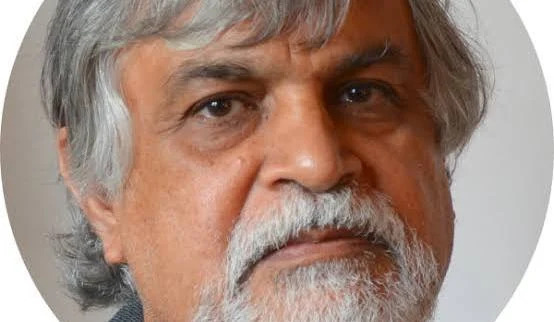
Moyez G. Vassanji M.G. Vassanji, writer
Of the short story “Leaving” That is found in The Anthology of When The Sun Goes Down and other stories.
Moyez G. Vassanji M.G. Vassanji, writer, editor (b at Nairobi, Kenya 30 May 1950). M.G. Vassanji grew up in Kenya and Tanzania, and was educated at MIT and the University of Pennsylvania. Having immigrated to Canada in 1978 with a PhD in nuclear physics, Vassanji began writing fiction while teaching at the UNIVERSITY OF TORONT
wow