

Rwanda urged nations and international partners to boost and sustain investment in mechanisms to prevent and combat pandemics, stating that one should not wait for an outbreak to occur before seeking the capacity to tackle it.
This statement was made by Prime Minister Dr. Justin Nsengiyumva at the 81st session of the United Nations General Assembly (UNGA 81), currently taking place in New York, USA.
The Prime Minister made these remarks as the world prepares for a UN High-Level Meeting focused on pandemic prevention, preparedness, and response, in collaboration with the Pandemic Fund.
Dr. Nsengiyumva noted that this is a critical moment for global health, as the risk of infection and the spread of pathogen-borne diseases could rise due to climate change and the movement of people and animals.
He also pointed out that international funding for the health sector is declining, even as the number of people in need continues to rise.
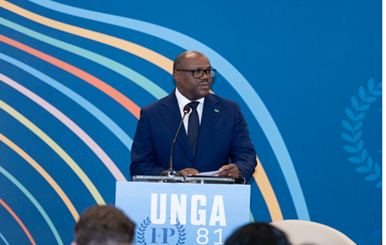
He stated: “We are being asked to increase our capacity to prepare for epidemics, yet we have limited funds to do so—and this is happening at a time when the need for preparedness is greater than ever.”
The Prime Minister noted that Rwanda has experience in tackling epidemics, having dealt with various diseases including COVID-19, mpox, Marburg, and the Ebola outbreak in the region.
He recalled that when Rwanda faced the Marburg outbreak in 2024, it relied on a well-established health system—comprising community health workers, disease surveillance mechanisms, laboratories, and hospitals—to combat the epidemic swiftly.
He said, “In the effort to contain the spread of Marburg, community health workers screened over 9.5 million people in a country with a population of approximately 14 million. The outbreak was brought under control within three months, and the case fatality rate was 22.7%—one of the lowest recorded for this disease.”
Dr. Nsengiyumva stated that this demonstrates that the capacity to respond to epidemics should not be built only during times of crisis, but rather must be an integral part of the country’s routine operations.
He stated: “Pandemic preparedness is not a specialized capability reserved solely for use during crises; rather, it is an integral part of routine health systems, ready to be deployed whenever the need arises.”
He noted that the partnership between Rwanda and the Pandemic Fund is supporting the country in advancing the “One Health” approach—which integrates human, animal, and environmental health—and in establishing a National Animal Disease Laboratory to facilitate the rapid detection of zoonotic diseases (diseases transmissible from animals to humans).
The Prime Minister emphasized that pandemic preparedness should not be the responsibility of a single nation alone, given that diseases can easily cross borders due to travel, trade, and climate change.
He called on countries to secure sufficient and sustainable domestic resources to build and maintain pandemic response capabilities, while urging international partners to provide predictable funding that can be reliably factored into strategic planning.
Dr. Nsengiyumva also advocated for integrating investment in pandemic prevention into national budgets as a permanent, ongoing activity, rather than waiting for an outbreak to occur. He stated: “The next pandemic could originate anywhere. We cannot predict in advance which disease will emerge, where it will strike, or the speed at which it will spread. What we can determine beforehand is the extent of our preparedness to confront it.”
He noted that Rwanda will continue to invest in strengthening its capacity to prevent and respond to pandemics, while collaborating with neighboring countries, regional organizations, and international partners to bolster this capacity at both regional and global levels.
The Prime Minister emphasized that the goal is to ensure that, should a pandemic break out, countries do not have to resort to trial-and-error approaches to find solutions, but rather possess the necessary systems and capabilities.