
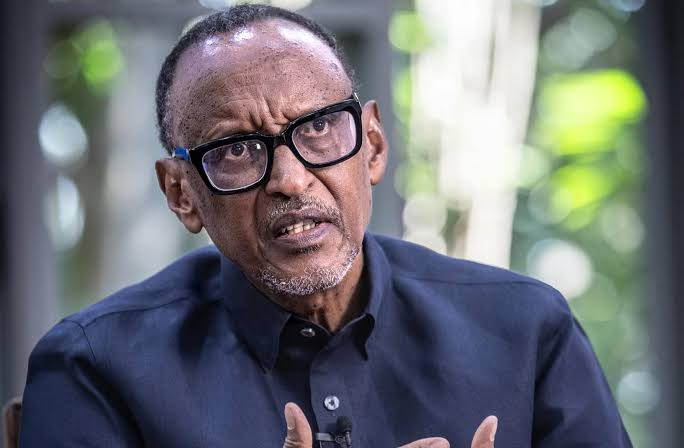
Today his Excellence, President Paul Kagame joined Press Conference with the Media in Kigali Convention Center, 24 August 2026. The discussion covered important national and regional issues, especially security in the Great Lakes region, relations between Rwanda and the Democratic Republic of Congo, the FDLR armed group, public health and illicit alcohol, economic development, governance, and Rwanda’s responsibility to protect its citizens, to name but a few.
One of the major issues discussed was the continuing security crisis in the eastern Democratic Republic of Congo. President Kagame has emphasized Rwanda’s long-standing concern about the presence and activities of the FDLR, an armed group whose members include individuals connected to the perpetrators of the 1994 Genocide against the Tutsi. He argued that a long term solution to the insecurity that continue affecting the region cannot be achieved without seriously addressing the FDLR and its support networks. According to Kagame, the international community should focus on eliminating the causes of insecurity rather than repeatedly treating Rwanda as the main source of the problem.
In his view, there has not been sufficient international action to enduringly deactivate the FDLR. He suggested that those who accuse Rwanda of using the existence of the armed group as an excuse should first support efforts to remove the group completely and then assess Rwanda’s security concerns. His argument was that Rwanda’s concerns should be understood within the country’s history and geographical reality. The presence of an armed group linked to forces responsible for genocide, operating close to Rwanda’s borders, remains a serious matter for the country.
Another important issue was the relationship between the Congolese government and the FDLR. Here, Paul Kagame criticized developments involving discussions and arrangements concerning the group’s disarmament and cantonment. He argued that such developments, rather than proving that the group is being treated as a self-governing enemy, raise further questions about the relationship between the FDLR and authorities in Kinshasa. He maintained that the regional crisis cannot be honestly resolved if the existence, influence, and alleged support of the armed group are ignored.
The President’s broader message on regional security was that peace requires addressing the real causes of conflict. In his view, diplomatic agreements and international pressure alone will not produce lasting peace if armed groups continue operating and governments fail to deal with the structures that sustain them. He therefore presented the FDLR issue as central to Rwanda’s security concerns and to the wider search for stability in the Great Lakes region.
A second major topic was the government’s crackdown on illicit and substandard alcoholic drinks. Journalists raised concerns about businesses and workers affected by the closure of facilities and the destruction of unsafe products. Kagame strongly defended the principle that the government has a responsibility to protect people’s lives. He stressed that the consequences of unsafe alcohol can be extremely serious, including illness and death, and argued that public health must come before the interests of businesses producing dangerous products.
The President made it clear that the government could not simply remain deskbound when products considered unsafe were harming citizens. He also directed attention toward institutions responsible for monitoring standards and ensuring that products available to the public meet the required regulations. His position was that accountability should not only focus on producers; regulators and inspectors must also be questioned when unsafe products reach consumers.
At the same time, Kagame acknowledged the broader debate surrounding enforcement. Some people have raised questions about the manner in which regulations are implemented and how businesses and individuals are treated during government crackdowns. His central argument, however, was that possible weaknesses in implementation should not distract from the seriousness of protecting human life. Where enforcement procedures need improvement, they can be corrected, but dangerous practices should not be tolerated simply because enforcement is difficult or controversial.
The discussion also reflected a broader principle that has frequently characterized Rwanda’s approach to development and governance: economic activity must be connected to responsibility and public welfare. Businesses are important for employment, investment, and national development, but commercial interests should operate within laws and standards designed to protect society. Kagame’s remarks suggested that development should not be measured only by profits or economic growth but also by the safety and well-being of citizens.
The press conference took place at a time when public discussions in Rwanda have included concerns about the cost of living, the relationship between citizens and institutions, business regulation, accountability, and service delivery. These issues formed part of the wider context surrounding the meeting with journalists, although reports available during the live session focused particularly on regional security and illicit alcohol.
Another important aspect of the event was the role of the media. A press conference provides journalists with an opportunity to raise questions directly with the Head of State and seek clarification on issues affecting both Rwanda and the wider region. The session therefore served as a public platform for discussing national policy, regional diplomacy, security, and matters affecting ordinary citizens. The live broadcast also enabled members of the public to follow the discussion directly.
President Kagame’s press conference on 24 August 2026 communicated a strong message about security, responsibility, accountability, and the protection of citizens. On the regional level, he insisted that the FDLR remains a central issue in the insecurity affecting eastern DR Congo and that a sustainable peace process must address the group and its alleged relationships with other actors. On the domestic level, he defended firm action against unsafe and illicit alcoholic products, arguing that the government cannot ignore practices that may endanger or kill citizens.
In conclusion, the press conference presented Rwanda’s leadership as focused on confronting challenges directly, whether they concern national public health or complex regional security issues. Kagame’s responses emphasized that leadership involves making difficult decisions and accepting responsibility for protecting the population. His principal message was that Rwanda will continue to defend its security interests, demand serious attention to the threats it identifies, and enforce standards intended to protect the lives and welfare of its citizens. The session also demonstrated the importance of continued dialogue between national leaders, journalists, and the public on the issues shaping Rwanda’s future.
You can also learn English by clicking on this link and